
Our clinic utilizing a combination of naturopathic, integrative & functional medicines. These ever-growing, in popularity & scientific validation, approaches combine the time-tested methods of traditional medicines (e.g., Chinese, Ayurvedic, herbal & mind-body medicines, manual therapies, nutrition, spirituality…) with conventional methods of blood testing, diagnostic imaging, prescription drugs and surgery. Our approaches to healthcare offer a generally very well-received, effective, and fresh alternative to the modern 10-15 minute conventional medical consult followed by drug prescription with considerably side effects, which is plaguing America’s expensive yet poor healthcare system (i.e., the United States (U.S.) spends at least twice as much $ per person for medical care than any other nation yet ranks number 37 in overall healthcare performance [Source: World Health Organization’s World Health Report, 2000]).
Importantly, a wide range of public health organization and insurance companies promote the usage of our approaches due to validated benefits of our services, public demand, and the need for healthcare improvement.
For example:
– All private insurers (United Healthcare, Anthem, Aetna, Cigna, etc.) as well as Medicaid for patients <21, and certain Medicare secondary plans cover naturopathic medicine in the states licensing them (such as CT), and the majority of integrative & functional medical practitioners (NDs, MDs, DOs, DCs, nurses, etc.) are covered by healthcare insurances if they choose to participate (many do not because of their high demand and improved compensation through cash payment).
– The Affordable Care Act requires that all insurance companies compensate for intensive behavioral and lifestyle counseling involving nutritional, exercise and motivation techniques for children and adults who are either obese or overweight with an additional heart disease risk factor (i.e., diabetes or pre-diabetes, high blood pressure, elevated cholesterol and/or strong family/ethnic history risk).
– An ever growing number of conventional medical and public health organizations promote the usage of our modalities for pain (see Natural & Integrative Pain Relief section for more details on endorsements and effectiveness). These latter endorsements is spurred by our currently devastating opioid addiction epidemic fed by the ineffectiveness and ill prescribing of drugs for chronic pain, and the ever-growing research foundation for the superior effectiveness of integrative approaches to chronic pain. In the future, as we currently see with pain, which is the #1 reason for medical visits worldwide, we expect that more and more public health agency endorsements will be received for our treatment approaches for other medical conditions. This will simply further validate what our patients regularly see and offer improved accessibility to our care.
CONDITIONS WE CAN EFFECTIVELY TREAT INCLUDE:
- Adrenal fatigue, excess and insufficiency (likely chronic fatigue and potential anxiety causes)
- Allergies including food, environmental, urticaria, and systemic allergies
- Alzheimer’s disease and prevention and other forms of memory impairment
- Anxiety and stress
- Arthritis including osteoarthritis, rheumatoid and other
- Asthma, exercised induced bronchioconstriction and other respiratory conditons
- Autoimmune conditions such as rheumatoid arthritis, lupus, multiple sclerosis and others
- Blood pressure (hypertension-high blood pressure, low blood pressure, and orthostatic hypotension)
- Cancer prevention and integrative strategies for treatment side effects and quality of life
- Cholesterol including high cholesterol-hyperlipidemia, low hdl cholesterol, and advanced lipid particle testing and treatment
- Chronic fatigue
- Chronic kidney disease prevention and treatment support
- Chronic pain involving all locations and subcategories
- Cold & Flu
- Depression
- Diabetes, pre-diabetes metabolic syndrome, and insulin resistance
- Digestion including irritable bowel syndrome, crohns, colitis, heartburn, gastritis, diverticulosis, food allergies, and difficult to treat gastro-intestinal conditions
- Disease prevention of heart disease, cancer, diabetes, alzheimers and other chronic conditions
- Eyesight related conditions including age related vision impairments, macular degeneration, allergies…
- Healthy childhood development including nutritional and lifestyle programs for all ages
- Ear conditions including ear infections and wax build up
- Heart conditions such as hypertension, atherosclerosis, coronary artery disease, arrhythmias, congestive heart failure, vascular insufficiency, peripheral artery disease
- Heavy metal toxicity
- HIV/AIDS treatment side effects and quality of life enhancement
- Infectious diseases unresponsive to conventional methods
- Inflammation
- Lung conditions such as asthma, copd, emphysema and chronic bronchitis.
- Medication weaning/elimination strategies with support of prescribing doctor.
- Menopausal symptoms such as hot flashes, weight gain and genitourinary issues
- Men’s health including hormone optimization, sexual and relationship health, prostate issues, erectile dysfunction, low libido, bodybuilding
- Mental health including depression, anxiety, seasonal affective disorder, adhd and others
- Migraines and other headaches
- Neurological conditions such as neuropathies, alzheimers, parkinsons, traumatic brain injury and others
- Oral health including gingivitis
- Pregnancy including lifestyle methods and functional testing to optimize fertility and both pre and post pregnancy success.
- Seasonal affective disorder
- Senior health optimization
- Sexual health
- Sinus conditions including acute and chronic sinustitis
- Skin including eczema, psoriasis, acne and other chronic conditions
- Sleep including insomnia and restless legs
- Substance abuse
- Thyroid conditions such as hypothryodism, hyperthyroidism, autoimmune thyroiditis, hashimotos, graves, and mineral testing of deficiencies such as iodine, selenium, zinc
- Urinary conditions including chronic urinary tract infection, interstitial cystitis, prostatitis, kidney disease
- Women’s health includes including premenstrual syndrome, polycystic ovarian syndrome, menopause symptoms, hormone optimization, pelvic pain, low libido, chronic yeast infections, osteoporosis/osteopenia
OUR TREATMENT MODALITIES:
- Balneotherapies
- Botanical-herbal medicine
- Chinese medicine including 5-elements and acupuncture
- Chelation oral therapies
- Cognitive behavioral therapy
- Comprehensive lab testing
- Detoxifications
- Energy medicines
- Exercise counseling
- Gua sha – instrumented assisted soft tissue technique
- Homeopathy and cell salts
- Hormone optimization and hormone replacement therapy
- Hydrogen peroxide oxygenation therapy
- Hydrotherapies and balneotherapies
- Lectin avoidance dietary strategies
- Lifestyle counseling
- Low level laser therapy aka cold laser
- Manipulations (naturopathic, osteopathic, chiropractic and soft tissue techniques)
- Medical astrology readings
- Massage therapy (medical grade)
- Metabolic typing
- Mind-body medicines, mindfulness and meditation
- Motivational Counseling
- Naturopathic, osteopathic and chiropractic manipulative therapy including cranial sacral therapy
- Nutritional counseling
- Physician grade, non-toxic, nutritional supplements
- Spiritual counseling
- Stress reduction
- Weight loss
What is naturopathic medicine?
(Source: American Association of Naturopathic Physicians. House of Delegates Position Paper [Amended 2011])
Naturopathic medicine is a distinct primary health care profession, emphasizing prevention, treatment, and optimal health through the use of therapeutic methods and substances that encourage individuals’ inherent self-healing process. The practice of naturopathic medicine includes modern and traditional, scientific, and empirical methods.

The following principles are the foundation of naturopathic medical practice:
- The Healing Power of Nature (Vis Medicatrix Naturae): Naturopathic medicine recognizes an inherent self-healing process in people that is ordered and intelligent. Naturopathic physicians act to identify and remove obstacles to healing and recovery, and to facilitate and augment this inherent self-healing process.
- Identify and Treat the Causes (Tolle Causam): The naturopathic physician seeks to identify and remove the underlying causes of illness rather than to merely eliminate or suppress symptoms.
- First Do No Harm (Primum Non Nocere): Naturopathic physicians follow three guidelines to avoid harming the patient:
- Utilize methods and medicinal substances which minimize the risk of harmful side effects, using the least force necessary to diagnose and treat;
- Avoid when possible the harmful suppression of symptoms; and
- Acknowledge, respect, and work with individuals’ self-healing process.
- Doctor as Teacher (Docere): Naturopathic physicians educate their patients and encourage self-responsibility for health. They also recognize and employ the therapeutic potential of the doctor-patient relationship.
- Treat the Whole Person: Naturopathic physicians treat each patient by taking into account individual physical, mental, emotional, genetic, environmental, social, and other factors. Since total health also includes spiritual health, naturopathic physicians encourage individuals to pursue their personal spiritual development.
- Prevention: Naturopathic physicians emphasize the prevention of disease by assessing risk factors, heredity and susceptibility to disease, and by making appropriate interventions in partnership with their patients to prevent illness.
Naturopathic practice includes the following diagnostic and therapeutic modalities: clinical and laboratory diagnostic testing, nutritional medicine, botanical medicine, naturopathic physical medicine (including naturopathic manipulative therapy), public health measures, hygiene, counseling, minor surgery, homeopathy, acupuncture, prescription medication, intravenous and injection therapy, and naturopathic obstetrics (natural childbirth).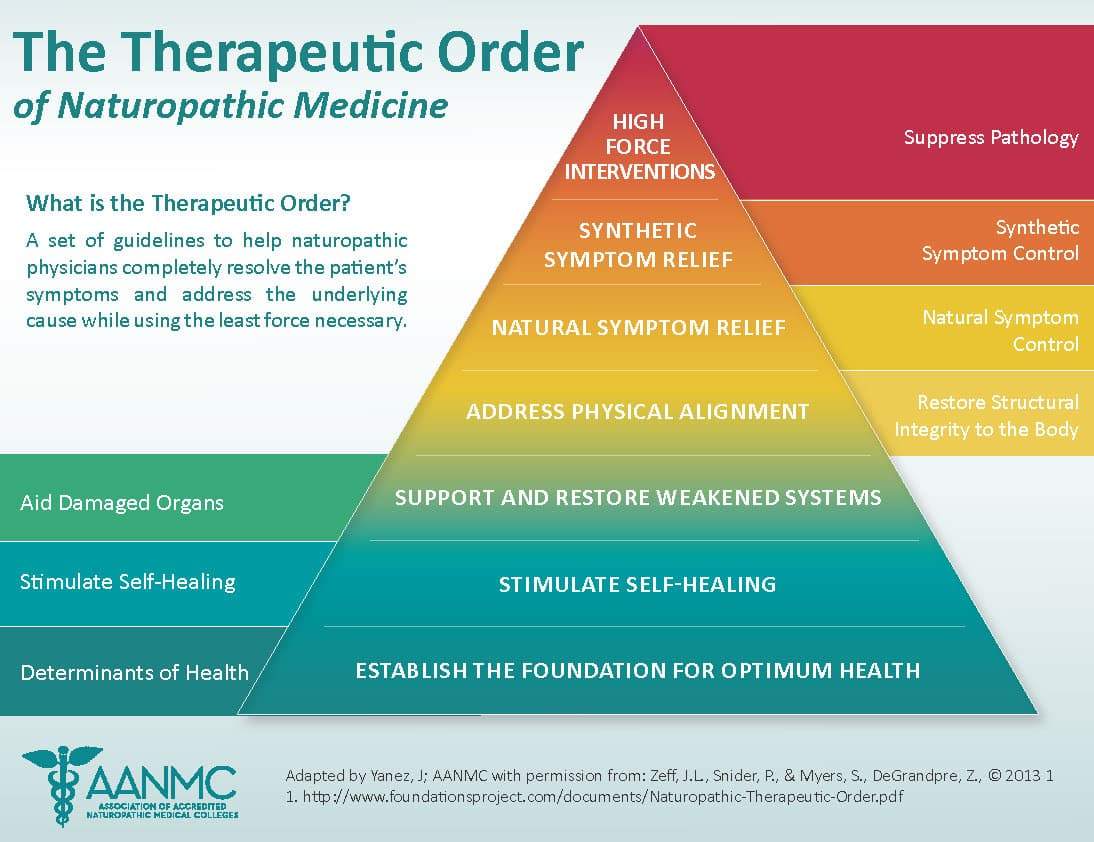
What is integrative medicine?
(Source: National Institutes of Health’s National Center for Complementary and Integrative Medicine [NCCIH] and Duke University Integrative Medicine)

Integrative health care often brings conventional and complementary approaches together in a coordinated way. It emphasizes a holistic, patient-focused approach to health care and wellness—often including mental, emotional, functional, spiritual, social, and community aspects—and treating the whole person rather than, for example, one organ system. It aims for well-coordinated care between different providers and institutions.
The use of integrative approaches to health and wellness has grown within care settings across the United States. Researchers are currently exploring the potential benefits of integrative health in a variety of situations, including pain management for military personnel and veterans, relief of symptoms in cancer patients and survivors, and programs to promote healthy behaviors.
Integrative medicine an approach to care that puts the patient at the center and addresses the full range of physical, emotional, mental, social, spiritual and environmental influences that affect a person’s health. Employing a personalized strategy that considers the patient’s unique conditions, needs and circumstances, it uses the most appropriate interventions from an array of scientific disciplines to heal illness and disease and help people regain and maintain optimum health
Integrative medicine is grounded in the definition of health. The World Health Organization (WHO) defines health as “a state of complete physical, mental and social wellbeing and not merely the absence of disease or infirmity.”
Integrative medicine seeks to restore and maintain health and wellness across a person’s lifespan by understanding the patient’s unique set of circumstances and addressing the full range of physical, emotional, mental, social, spiritual and environmental influences that affect health. Through personalizing care, integrative medicine goes beyond the treatment of symptoms to address all the causes of an illness. In doing so, the patient’s immediate health needs as well as the effects of the long-term and complex interplay between biological, behavioral, psychosocial and environmental influences are taken into account.
Integrative medicine is not the same as alternative medicine, which refers to an approach to healing that is utilized in place of conventional therapies, or complementary medicine, which refers to healing modalities that are used to complement allopathic approaches. If the defining principles are applied, care can be integrative regardless of which modalities are utilized.
The defining principles of integrative medicine are:
- The patient and practitioner are partners in the healing process.
- All factors that influence health, wellness and disease are taken into consideration, including body, mind, spirit and community.
- Providers use all healing sciences to facilitate the body’s innate healing response.
- Effective interventions that are natural and less invasive are used whenever possible.
- Good medicine is based in good science. It is inquiry driven and open to new paradigms.
- Alongside the concept of treatment, the broader concepts of health promotion and the prevention of illness are paramount.
- The care is personalized to best address the individual’s unique conditions, needs and circumstances. Practitioners of integrative medicine exemplify its principles and commit themselves to self-exploration and self-development.
In addition to addressing and handling the immediate health problem(s) as well as the deeper causes of the disease or illness, integrative medicine strategies also focus on prevention and foster the development of healthy behaviors and skills for effective self-care that patients can use throughout their lives.
What is functional medicine?
(Source: The Institute for Functional Medicine)
Functional Medicine is a systems biology–based approach that focuses on identifying and addressing the root cause of disease. Each symptom or differential diagnosis may be one of many contributing to an individual’s illness.
As the graphic illustrates, a diagnosis can be the result of more than one cause. For example, depression can be caused by many different factors, including inflammation. Likewise, a cause such as inflammation may lead to a number of different diagnoses, including depression. The precise manifestation of each cause depends on the individual’s genes, environment, and lifestyle, and only treatments that address the right cause will have lasting benefit beyond symptom suppression.